Biliary tract cancer is a disease that causes about 20,000 new diagnoses per year in Japan and Europe, about 14,000 people per year in the United States, and about 44,000 people in China per year. Because subjective symptoms are scarce in the early stages, many patients are diagnosed only in the advanced stage.
Advanced stage biliary tract cancer has extremely limited treatment options and the prognosis remains poor. The 5-year survival rate is less than 25%, making it one of the lowest cancer types after pancreatic cancer. Against this background, biliary tract cancer is an area with very high unmet medical needs, and there is a strong need to develop new treatments.
In biliary tract cancer, when comparing patient groups based on the amount of LAT! expression, it was confirmed that the survival time was significantly shorter in the high LAT1 expression group.
Overall survival (OS) comparison in biliary tract cancer (high vs. low LAT! expression)

Kaira et al., BMC Cancer. 2013, 13, 482.
These results indicate that high LAT! expression can be an indicator of poor prognosis in patients with biliary tract cancer, and is the basis for LAT! to be noted as a strong candidate for new molecularly targeted therapies.
Biliary tract cancer is classified into four types in Japan: intrahepatic cholangiocarcinoma, extrahepatic cholangiocarcinoma, gallbladder cancer, and duodenal papillary cancer, but in Europe and the United States, three are treated as biliary tract cancer, excluding duodenal papillary cancer.
In addition to chemotherapy, anti-PD-1 antibody drugs and anti-PD-Ll antibody drugs are used in all subtypes of first-line therapy, and the current standard therapy is a combination of chemotherapy and anti-PD-1/PD-Ll antibody drugs. However, less than 25% of patients who receive this treatment are still alive after 24 months, and there is still a significant unmet medical need. In particular, after 25 weeks of treatment, patients will switch to maintenance therapy with anti-PD-Ll antibody monotherapy or anti-PD-1 antibody+ gemcitabine, but the progression of the disease during that time is a challenge.
Molecularly targeted drugs are used in second-line therapy, and there are four approved drugs in the United States. However, only about 30% of patients who proceed to second-line therapy have effective genetic mutations (IDHl mutation, FGFR2 positive, HER2 positive) for these drugs, and there are currently no effective approved drugs for the remaining 70% of patients (this is the case in Europe and the United States, and there are approved drugs that can be used as second-line therapy in Japan).
Treatment options for second-line therapy for biliary tract cancer

Nambranlat has been shown to be effective in animal models in combination with anti-PD-1/PD-Ll antibodies, and may be added to maintenance therapy after Week 25 in first-line therapy to provide additional benefits without competing with standard therapy.
In addition, the results of clinical trials to date suggest that it may be the only approved drug of choice for approximately 70% of patients for whom no existing approved drug exists. Because of its excellent safety, it has the potential to be a treatment that will stay close to patients until the end.
We conducted a domestic phase 2 clinical trial of Nanbulan Lat This study was a large-scale, double-blind, randomized, placebo- controlled trial that screened 211 patients after second-line biliary tract cancer therapy and randomized 105 patients, and ended in 2022 (70 patients in the Nambranlat group (1 of whom was excluded from the analysis due to discovery of ineligible disease, 69 were included in the analysis) and 35 patients in the placebo group).
Design of a Phase 2 clinical trial in Japan

At the ASCO GI 2023 (American Society of Clinical Oncology Gastrointestinal Cancer Symposium) held in January 2023, the results of Nam bran Latto showed a statistically significant difference in progression-free survival (PFS) in previously treated patients with advanced and refractory biliary tract cancer compared to the placebo group, and the results of achieving the primary endpoint were orally presented (hazard ratio; 0.56, 95% confidence interval: 0.34- 0.90, p;0.02) o
The incidence of adverse drug reactions (side effects) was 4L4% in the Nanbulan rat group and 57,l% in the placebo group, and grade 3 or higher adverse events were in 30.0% in the Nanbran rat group and 22.9% in the placebo group. In none of them, no events leading to discontinuation, dose reduction, or death were observed, and safety was confirmed, In particular, the grade 3 or higher adverse event rate was lower than FOLFOX (69%), which is used in second-line biliary tract cancer, and gemcitabine/cisplatin + durvalumab (76%), which is the standard of care for first-line therapy, confirming the excellent safety profile of nambululat. This characteristic also allows for long-term treatment and potential market expansion to a patient population that is now opting for palliative care.
In addition, at the Clinical Science Symposium of the American Society of Clinical Oncology in June 2023, a subgroup analysis of the study was orally presented, The presentation explained that there was a statistically significant difference between the high LATl expression group (hazard ratio; 0.44, 95% confidence interval: 0.23-0.85, p;0,01) and the extrahepatic cholangiocarcinoma and gallbladder cancer group (hazard ratio; 0,22, 95% confidence interval: 0.10-0.49, p<0.001)*51.
With only a few percent of the acceptance rate for oral presentations at ASCO, the two opportunities to present the results of the Nambranrat clinical trial in 2023 demonstrate the international appreciation of our data, In addition, the results of the trial were published in the September 15, 2023 issue of Clinical Cancer Research, a journal published by the American Cancer Society.
Most recently, at ESMO Congress 2025, the results of the subgroup analysis of overall survival (OS) were presented in a poster. In the subgroup analysis presented in this presentation, the hazard ratio= 0.76 (95% confidence interval: 0.40-1.26) was shown in the analysis of three subtypes of biliary tract cancer, except for duodenal papillary cancer (which is not included in biliary tract cancer in Europe and the United States). In addition, the hazard ratio; 0.55 (95% confidence interval: 0.09-3.54) in the analysis limited to the second-line therapy group (excluding the group of patients after third-line therapy), and the hazard ratio; 0.53 (95% confidence interval: 0.228-1.01) in the group of patients who did not undergo surgery, showing a good OS improvement effect.
Nanbran Latto Phase 2 Clinical Trial: Subgroup Analysis of OS Hazard Ratios.

•1HC: lntrahepatic cholangiocarcinoma, EHC: Extra hepatic cholangiocarcinoma, GBC: Gallbladder cancer
In addition, the poster presentation also introduced exposure-response analysis using data from the study. This analysis evaluated the relationship between the drug exposure in vivo and efficacy, and as a result, a positive correlation was found between accumulated ALIC and OS. In addition, the higher the cumulative exposure (Accumulated AUC), the more tumor shrink tendencies.
Exposure-reaction analysis of Nanbulan rat
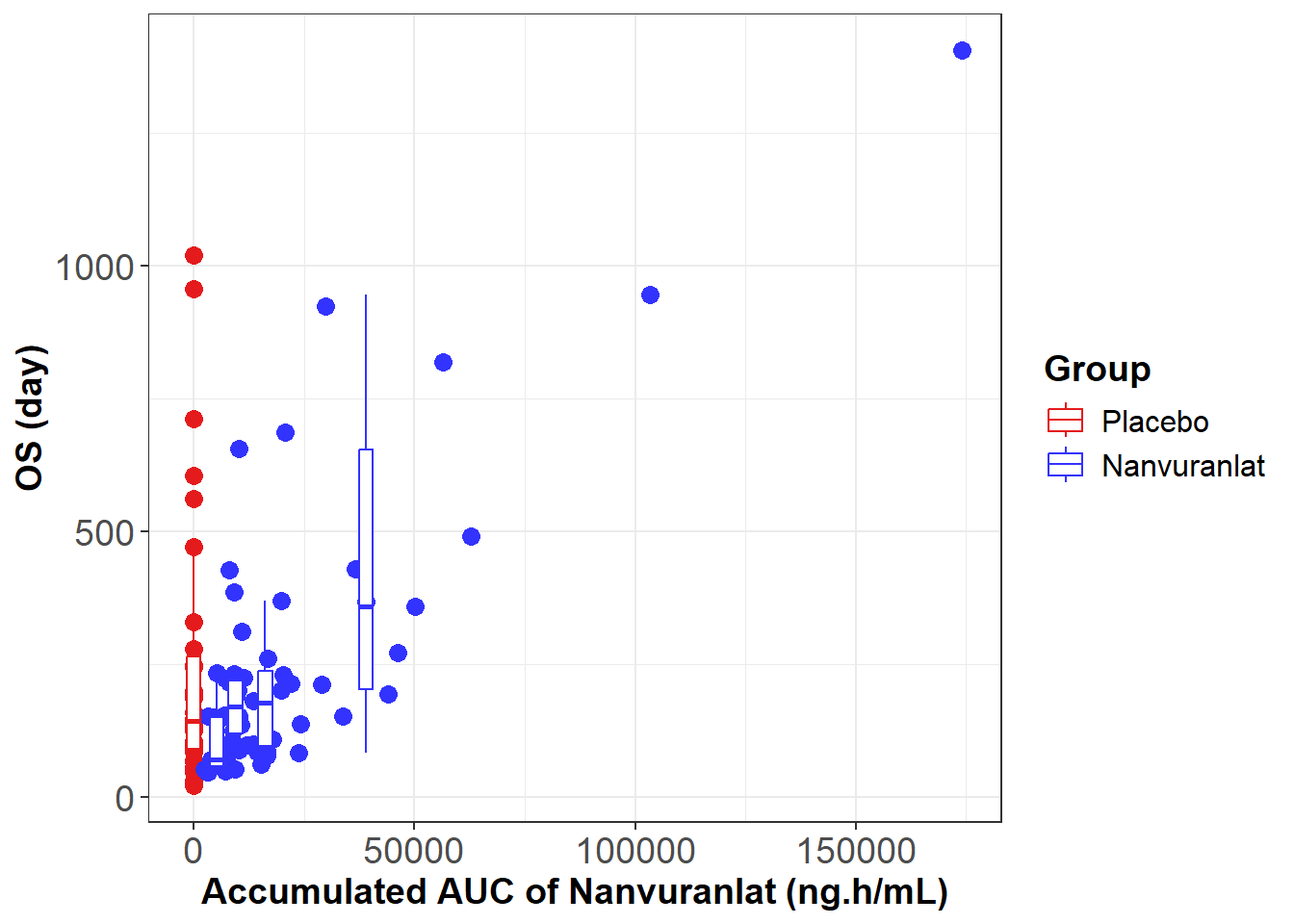
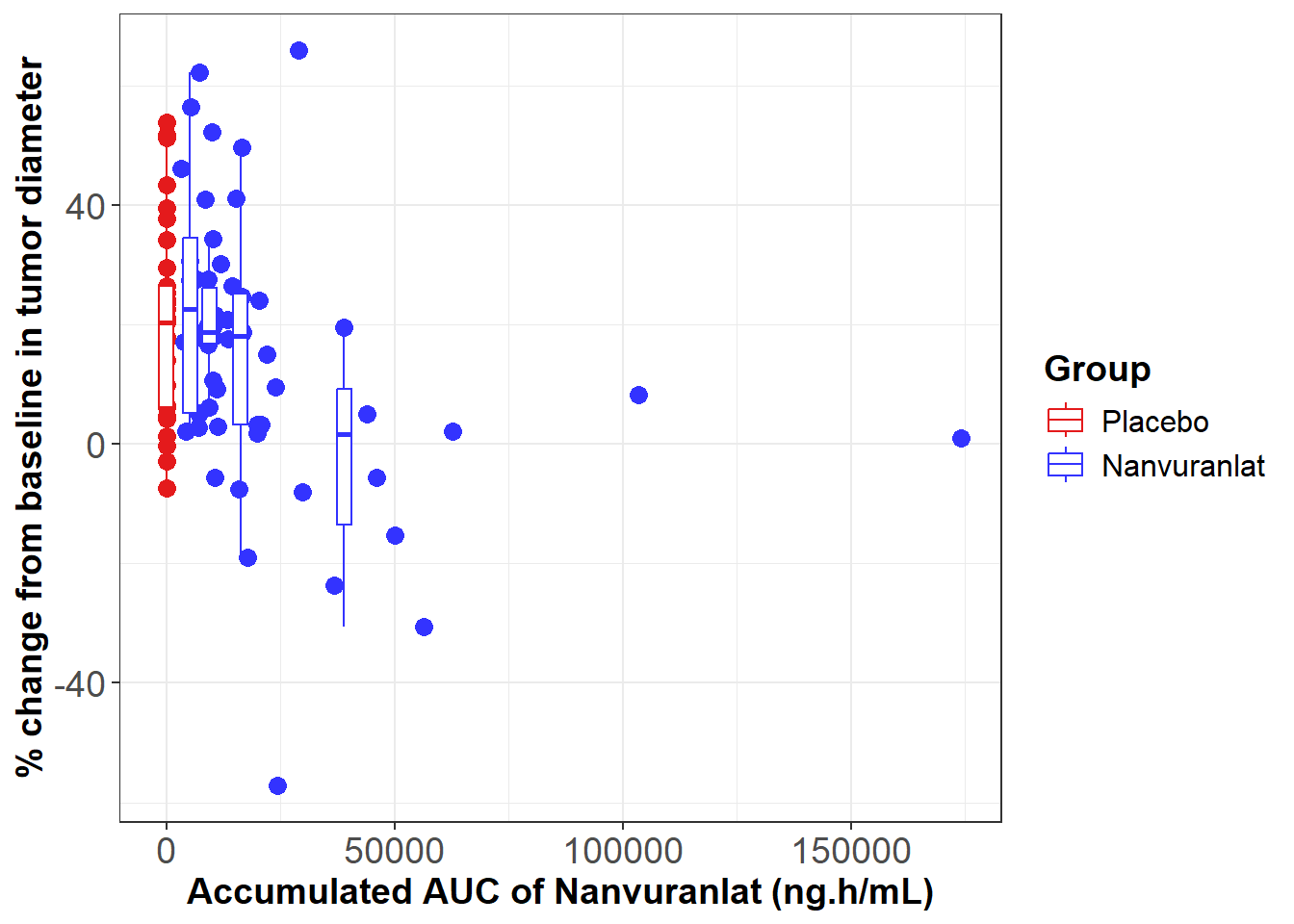
M. Ueno, et al., ESMO 2025. 98P - Subgroup analysis of a Ph.2 study of nanvuranlat in pre-treated, advanced, refractory biliary tract cancer patients (BTC) support an enriched patient population for a planned Ph.3 study.